English
Why Dimensional Consistency Is Critical in Large-Scale Solar Projects
In large-scale solar projects, success depends not only on advanced technology and high-quality materials but also on precise manufacturing. One often overlooked yet critical factor is dimensional consistency—the ability to produce components with exact, uniform measurements across every batch. In solar mounting systems, where thousands of brackets, rails, clamps, and fasteners must fit together seamlessly, even small variations in dimensions can lead to installation challenges, structural issues, and long-term performance risks. Ensuring dimensional consistency is therefore essential for efficiency, safety, and overall project success. At the installation stage, dimensional consistency directly impacts speed and efficiency. Large solar projects involve repetitive assembly of mounting structures across wide areas. When each component is manufactured to exact specifications, installers can work quickly without needing to adjust, modify, or force parts into place. Consistent dimensions allow for smooth alignment of rails, precise positioning of panels, and accurate fastening of connections. This reduces installation time, lowers labor costs, and minimizes delays, which is especially important in projects with tight schedules.
Dimensional accuracy also plays a vital role in structural integrity. Solar mounting systems are engineered based on precise load calculations, where each component contributes to distributing weight and resisting environmental forces such as wind and snow. If parts vary in size or shape, connections may become loose or uneven, leading to stress concentration at certain points. Over time, this can weaken the structure and increase the risk of deformation or failure. Consistent dimensions ensure that loads are evenly distributed across the entire system, maintaining stability and long-term reliability. Another key benefit of dimensional consistency is improved panel protection. Solar panels are sensitive components that require even support to avoid stress damage. If mounting structures are misaligned due to inconsistent parts, panels may experience uneven pressure or improper clamping. This can lead to micro-cracks, frame distortion, or reduced performance over time. By ensuring that all mounting components fit perfectly, dimensional consistency helps maintain proper panel alignment and protects the integrity of the modules.
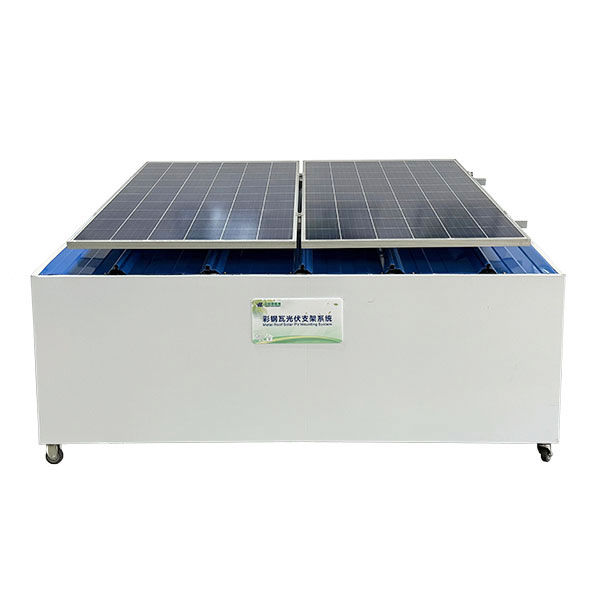
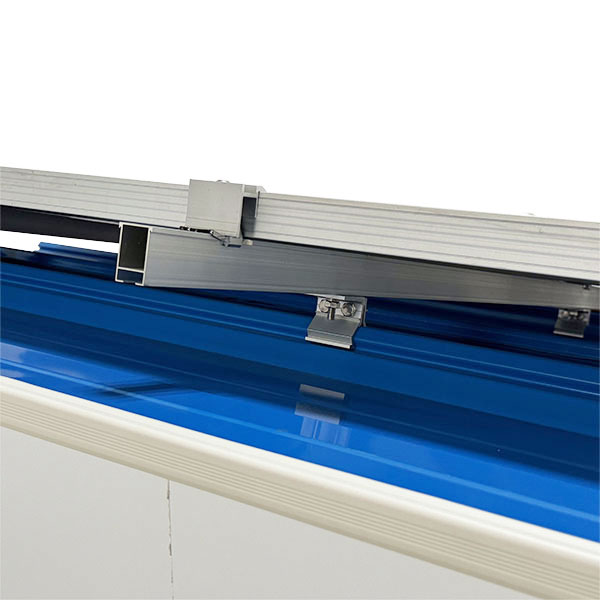
In large-scale projects, logistics and material management also depend heavily on consistency. Thousands of components are transported, stored, and distributed across the installation site. When all parts are standardized and dimensionally accurate, packaging, sorting, and inventory management become much simpler. Installers can quickly identify and use components without confusion or re-measurement. This reduces handling time and prevents errors that could slow down the installation process. Dimensional consistency also reduces waste and rework. Inconsistent parts often require on-site adjustments such as cutting, drilling, or repositioning, which not only consumes additional time but also increases material waste. These adjustments can compromise the structural integrity of the mounting system and introduce potential safety risks. High manufacturing precision eliminates the need for such modifications, ensuring that components fit as designed and perform reliably without additional intervention.
From a quality control perspective, maintaining dimensional consistency reflects the overall manufacturing capability of a supplier. Advanced production equipment, such as CNC machining and precision forming systems, allows manufacturers to maintain tight tolerances across large production volumes. Continuous inspection during production ensures that each batch meets strict dimensional requirements. This level of precision builds confidence among project developers and EPC contractors, who rely on consistent quality for successful project execution. Dimensional consistency also supports scalability in large solar installations. As projects expand in size, the number of components increases significantly. Consistent dimensions allow systems to be replicated easily across multiple sections of a project without redesign or adjustment. This repeatability is crucial for utility-scale solar farms, where efficiency and uniformity directly affect project timelines and costs.
In addition to installation and performance benefits, dimensional consistency contributes to long-term maintenance efficiency. When components are manufactured to exact specifications, replacement parts can be easily sourced and installed without compatibility issues. This simplifies maintenance operations and reduces downtime, ensuring that the solar system continues to operate efficiently over its lifespan. In conclusion, dimensional consistency is a fundamental requirement in large-scale solar projects. It ensures fast and accurate installation, maintains structural integrity, protects solar panels, simplifies logistics, reduces waste, and supports long-term reliability. By investing in precision manufacturing and strict quality control, solar mounting system providers can deliver consistent components that enable efficient project execution and stable performance. In an industry where scale and precision go hand in hand, dimensional consistency is not just a technical detail—it is a key driver of success.